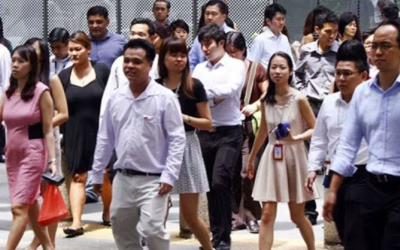
新加坡:30多歲的父親R每天最擔心的事,不是加班到深夜,而是——他成了部門裡唯一一個每周在家辦公兩天的人。
當初,當他向部門主管申請靈活辦公時,對方爽快批准,只為讓他能照顧兩歲的孩子。可當公司於2025年底將『回辦公室上班』重新定為默認政策後,他的『在家辦公』竟成了同事眼中的異類行為。
「他們不說破,但會用沉默懲罰你,」R說,「我發Teams消息沒人回,郵件發了三天沒回復,偏偏等我回辦公室,才湊過來當面聊——仿佛遠程工作是種偷懶的特權。」
儘管他工作響應率100%,績效穩居團隊前茅,他仍擔心某天主管會說:「你要繼續遠程辦公?那這份工作可能不再適合你了。」
這不是個例。
新加坡推行靈活辦公已超一年。根據人力部(MOM)數據,七成企業已提供靈活工作安排,近九成申請獲得批准。但員工們卻發現:靈活性,正在悄悄成為一種代價。
「隱形霸凌」:當同事用沉默表達不滿
R的妻子在醫療行業,無法遠程辦公;母親兼職幫忙帶娃。他每周兩天在家辦公,只為多睡一小時、邊工作邊盯住孩子,結果效率反而飆升。可辦公室政治卻讓他如履薄冰。
另一位在博物館工作的Jolie,因照顧病重父母獲得靈活工時。主管起初信任她,但高層卻擔心:「如果誰想在家就回家,那辦公室還有意義嗎?」
父母去世後,這位上司甚至每天發消息查崗:「你真在工作嗎?別把靈活當福利。」
「父親的原罪」:為什麼男人申請遠程辦公更難?
新加坡國立大學與倫敦國王學院2022年研究發現:男性申請遠程辦公,反而更容易被貼上「不夠投入」的標籤。
因為傳統觀念中,男性本就是「理想員工」——全天候在線、隨時待命。當他們提出靈活安排,就打破了「男人就該在工位上拚命」的刻板印象。
「他們不是不努力,」研究者Dr. Wang指出,「而是他們的『努力』,被默認定義為『坐在辦公室』。」
「不是福利,是剛需」:癌症康復者、新手媽媽的無聲掙扎
一位癌症康復員工坦言:「同事以為我好了,可我每天要吃藥、做復健、應對腦霧和疲勞。他們不理解,為什麼我不能準時開會。」
而像Arveen Kaur這樣的職場媽媽,雖被公司主動提供「兼職全職」崗位,仍不敢公開提及孩子需求——怕被當成「靠照顧家庭才獲得優待」。
「你不是在偷懶,你是在拯救生產力」
人力部數據顯示,65.4%的員工將「靈活辦公」列為擇業關鍵因素,僅次於薪資。15%的「高就低聘」者,更是因為「時間自由」才接受崗位。
但問題在於:政策只要求「考慮」請求,不強制「批准」。
「這導致經理們把靈活辦公當成『施捨』,」南洋理工大學Trevor Yu教授說,「他們以為『在辦公室』=『有責任心』,卻忘了:真正的敬業,是交付成果,不是打卡簽到。」
未來已來:從「打卡思維」到「成果思維」
專家呼籲:企業必須停止用「是否在工位」衡量價值,轉而建立以績效、交付、結果為核心的評估體系。
「靈活辦公不是獎勵,是新常態。」
R說:「我們有育兒津貼、生育獎勵,但若連『在家帶娃』都算職場風險,那新加坡的生育率,永遠只能靠補貼硬撐。」
「當一個父親因為想照顧孩子,就要被懷疑是否『配得上』這份工作——那我們真正失去的,不只是他的生產力,更是下一代的希望。」


Working mum Arveen Kaur on her first day of work in 2024 (left) and with her daughter in 2025 (right). (Photos: Arveen Kaur)
CLASHES OVER FLEXIBILITY
In some cases, disagreements over flexibility have put workers』 livelihoods in danger and led to acrimony between employer and employee.
MW, 40, works in a real estate consultancy and is a father of two. His 10-year-old son has complex special needs, difficulties with mobility and feeding, and is non-verbal.
In early 2024, the family went through a crisis period when MW’s son was hospitalised and their maid, the boy’s main caregiver, was diagnosed with an end-stage illness.
With his son fully reliant on him, MW had to ask his then-employer to let him work from the hospital so he could look after the boy.
The employer was unhappy as this went on for two months, and warned MW he could be terminated if this continued.
He managed to change jobs before that, and now works for a company that gives him more flexibility to work from home. His son is out of the hospital and doing better.
But MW said he is not open with his new employer about his son’s health conditions, and would hesitate to apply for flexible work arrangements even if he needed them.
「If my work is really strictly asking me to come to the office …. I might be reluctant to apply (for flexible work arrangements),」 he said.
「My former experience was pretty traumatising. I almost lost my job and I was the sole breadwinner. So if I lose my job, it’s really not easy.」
CNA also spoke to a working mother who made a report with the Tripartite Alliance for Fair and Progressive Employment Practices (TAFEP) about issues including flexible work.
She wanted flexibility in her work location and timing to fulfil her maternity-related and infant caregiving responsibilities.
Her request was turned down by her employer citing the operational requirements of her role, said the woman, who is a senior leader in her firm.
The disagreement with her employer has not been resolved.
Such disputes are why TAFEP provides a channel to investigate complaints.
If companies do not comply with having a process to evaluate flexible work requests, the agency can advise and educate employers on how to follow the guidelines.
As for cases where employers are recalcitrant or wilfully refuse to comply with the guidelines, MOM may issue a warning and require them to attend corrective workshops, the ministry said previously.
So far, TAFEP has received one complaint on flexible work arrangements since the guidelines took effect on Dec 1, 2024.
「The complaint involved a company that communicated the outcome of the flexible work arrangement request verbally and not in writing,」 said a TAFEP spokesperson.
「TAFEP has since worked with the company to revise its processes to be in line with the tripartite guidelines.」
THE FLEXIBILITY STIGMA
To look into how formal remote work arrangements translate to real-world outcomes, researchers Wang Senhu from the National University of Singapore (NUS) and Chung Heejung from King’s College London investigated how managers in Singapore perceive employees who work remotely.
In their 2022 survey – which was before the guidelines were formalised – 473 managers were asked to evaluate hypothetical workers with different profiles, including some remote workers.
The workers were rated on their commitment, productivity, team spirit and promotion opportunities.
The managers gave remote workers significantly lower ratings than full-time office workers, according to the findings published this February in the journal Gender, Work & Organization.
The researchers said this confirms theories of a 「flexibility stigma」 – the bias that workers who use flexible work arrangements are less productive, motivated or committed.