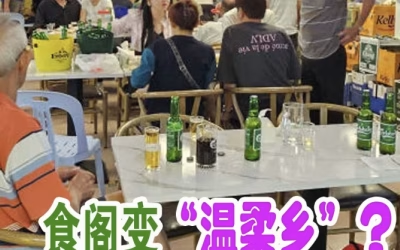
Hawker culture emerged in Southeast Asian urban areas following the rapid urbanization in the 1950s and 1960s, especially in Singapore and Malaysia. They are typically found in city centers, near public housing estates or transport hubs. Instead of mobile food carts, permanent stalls in open air buildings are provided for the hawkers.
上世纪五六十年代东南亚城市化进程加快,大排档也应运而生,在新加坡和马来西亚尤其风靡。它们通常在市中心的居民区和交通枢纽附近扎根,和早期的流动小吃摊不同,大排档提供了稳定的经营环境,店主有固定的敞开式门面,为门外的食客提供餐饮服务。

In Singapore, for example, the legislation of hawker licensing laws helps the hawkers build an organized and hygienic business. Hawker centers can provide a one-stop destination with a good variety of high quality, sanitary food at inexpensive prices for everyone.
以新加坡为例,针对大排档制定的法规对于经营的秩序和卫生提出了要求。汇聚各类美食的大排档形成了规模,食客可以一站式地品尝到物美价廉的食物。

As of 2016, two Singaporean food stands, both located in hawker centers, became the first street food vendors to be awarded a Michelin Star for excellence in eating. The model Singapore established eliminated stereotypes of hawkers as cheap food sellers. Modern hawker centers are not only decked up in stylish furnishings, they also sell food commonly found in restaurants and cafes, and try to define hawker as a unique genre of local culture.
在2016年,新加坡大排档中有两家摊贩首次入选米其林的美食指南。新加坡的规范管理帮助人们消除了对大排档脏乱差的偏见,越来越多的新式大排档也冒了出来。除了新潮的装潢,它们所售卖的食物也包括往常只在中高档餐馆、咖啡厅中出现的菜品,大排档本身俨然成为了当地人引以为傲的一种美食文化。

However, Singapore's bid has received some criticism from across the border. Some Malaysians have claimed that their country is a street food paradise and that Singapore's hawker version is not that special. As a response, Singapore reiterates that hawker centers serve as community dining spaces for everyone, and how it reflects Singapore's multicultural society.
然而,新加坡申遗的举动也引起了对岸邻国的不满和批评。不少马来西亚群众宣称马来西亚才是真正的美食天堂,新加坡的大排档并不是特例。作为回应,新加坡则重申本国的大排档文化是大众都喜爱的饮食方式,反映出了新加坡独特的多元文化。