猪年大吉
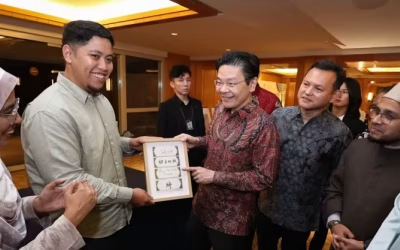
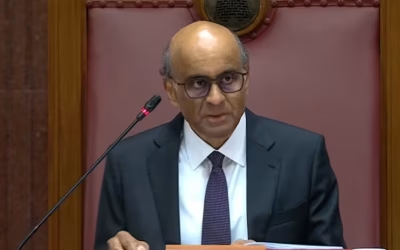
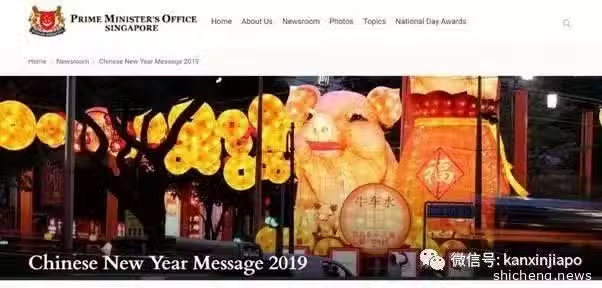
2月4日,农历除夕,新加坡总理公署发布总理李显龙的新春献词。
李显龙总理在讲话提到莱佛士在两个世纪前登陆新加坡,这是新加坡历史上的一个关键转折点。李显龙总理追忆百年前,华人移民在新加坡如何过新年,并且介绍了新加坡华人形成的具有本土特色的新年习俗,他说“随着新一代的华人长大成人还有新移民的加入,新加坡华人的身份将继续演变”,“会像我们的先辈一样入乡随俗,接受这里的社会规范,积极融入本地社会”。最后,他还送来了特别的新年祝福。
以下为李显龙总理新春贺词的英文版:
This year, we are commemorating the Singapore Bicentennial. 200 years ago, Stamford Raffles arrived in Singapore. That marked a crucial turning point in our history, including for our Chinese community. While Chinese junks had traded in Singapore as far back as the 14th century, large-scale immigration started only after Raffles established a free port here.
Chinese immigrants came from as close by as Malacca and as far away as Canton, Swatow and Amoy. Like other groups, the Chinese came to seek their fortunes and support loved ones back home. Some immigrants eventually returned to their home villages. But many stayed, and gradually made Singapore their home.
Most immigrants arrived in Singapore in debt, and did back-breaking work here as plantation workers and coolies. When Chinese New Year came, they were too poor to travel back home. Instead, they celebrated with fellow labourers and clan members in Chinatown, and re-created whatever traditions they could – eating auspicious foods, performing lion dances for good fortune, and setting off fire crackers to drive away evil spirits.
Over the years, Chinese Singaporeans developed our own unique rituals and traditions celebrating Chinese New Year, which were passed down the generations. Today, at reunion dinners, we do lohei (捞鱼生) to express our hopes and wishes for the coming year. When visiting friends and relatives, we enjoy pineapple tarts, kueh lapis spekkoek and kueh bangkit, a reflection of the Southeast Asian heritage of the Straits Chinese. In the 1970s, we stopped letting off firecrackers at homes and along the streets, because in a built up and dense city, this was dangerous to people and property. In their place, to kindle the festive mood, we started holding Chingay Parades (妆艺大游行) from 1973.
The Chingay Parades were inspired by the pre-war Chingay processions in Penang to celebrate temple festivals. The first few featured mainly Chinese cultural items – lion and dragon dances and traditional performances. But since then Chingay has grown into a celebration for people of all races and ages. Chinese lion dancers perform alongside Malay children playing the kompang and Indian dance troupes classical and modern. All our ethnic cultures contribute items. International groups too, participate, coming all the way from Japan, Russia or China. Every year, thousands of Singaporeans young and old look forward to taking part in and watching the Chingay Parade. The involvement of all races adds a special joy and richness to the festivities, and reflects our unique multicultural society. We see this happening also when the Chinese join in Hari Raya celebrations with our Muslim friends, and Deepavali festivities with our Hindu friends.
The way we celebrate Chinese New Year reflects how the Singapore Chinese identity has evolved and emerged over the years. Chinese Singaporeans have integrated into a larger, multiracial whole. In the process Singaporean Chinese have become distinct from Chinese communities elsewhere, both the Chinese societies of China, Hongkong and Taiwan, and the overseas Chinese minorities in the diaspora in Southeast Asia and the West.
But identity, like tradition, is dynamic. As new generations come of age and new immigrants join us, the Singaporean Chinese identity will keep on evolving. The new arrivals will enrich our cultural heritage with their different life experiences and perspectives. At the same time, I hope that over time they will adjust their social norms to our local context, and embrace our uniquely Singaporean cultural habits, just as earlier generations did. This is the way for the Chinese community to stay vibrant, and for Singapore to be open, dynamic and resilient for many years to come.
I wish all Singaporeans a happy and prosperous Chinese New Year.