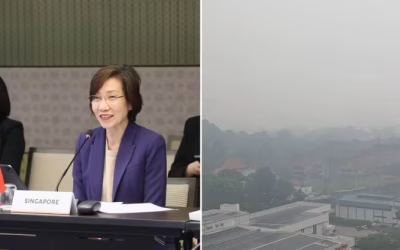
新加坡內政部兼社會及家庭發展部政務部長孫雪玲回複議員關於嬰幼兒早期介入計劃的問題。
以下內容為新加坡眼根據國會英文資料翻譯整理:
陳澮敏女士:謝謝主席先生。我想就嬰幼兒早期介入計劃(EIPIC),向孫雪玲國務部長作出詢問。她提到如果家長的孩子有發展障礙,嬰幼兒早期介入計劃將為家長提供哪些培訓?
其次,是關於能力建設的問題。據我所知,目前,有發展障礙的兒童在嬰幼兒早期介入計劃中心註冊的等待時間,可能長達幾個月,這有點諷刺,因為以他們的情況,應該越早干預越好。那麼,教育部是否會考慮通過從國外吸引人才和訓練有素的專業人員,來加強應對能力,然後在未來三到五年內進行本地人才建設,以確保嬰幼兒早期介入計劃服務速度更快?
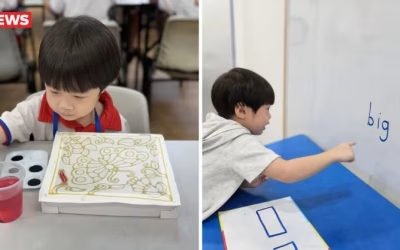
孫雪玲女士:我感謝這位議員的提問。首先,是的,我曾經提到過,我們將推出「嬰幼兒早期介入計劃—照護培訓(EIPIC-Care)「試點項目,這是一項針對2到3歲有發展障礙兒童的護理培訓計劃。我們之所以要這樣做,是因為國際研究表明,父母是孩子的早期教育者,是孩子生活中的早期榜樣,他們最有效的對孩子的社交和情感技能進行干預。而這一切,都可以在家裡進行。這項計劃為期六個月,看護者將通過小組工作坊和個別輔導課程,向專業人士學習如何在家中支持孩子的發展。
關於她提出的第二個問題,我曾與她分享過,我們將通過增加1200個名額,推出更多的「嬰幼兒早期介入計劃」名額。這已經比2022年增加了26%。而在2024年,我們將再推出四個早期干預中心,增加1500個名額。這些數字並不小。
如果從百分比的角度來看,我們正在擴大政府資助的兒童服務名額,將需要中高水平早期干預的兒童覆蓋率從60%提高到80%。因此,從百分比的角度考慮,這已經是一個非常大的增長。
顯然,這意味著我們必須引進更多的專業人員。但我們也非常清楚,這些專業人才顯然必須接受過充分的培訓,他們還必須了解我們的社會規範。非常重要的是,他們必須能夠與我們的家長合作,與這些發展障礙兒童的家長合作。
因此,在一些專業性較強的地方,例如,可以是言語治療,也可以是遊戲治療。在可能的情況下,我們會考慮引進國際工作人員,以應對和提供幫助。我們希望在新加坡保留一批核心教育工作者,而且我們肯定會培訓更多這樣的教育工作者,因為重要的是,我們能夠通過在新加坡接受過培訓並得到新加坡家長信任的教育工作者,來照顧這些有發展障礙的兒童。
嚴燕松先生:我很高興聽到新加坡社會及家庭發展部計劃將託兒服務專業化,並提供資助。
那麼,我想請問孫雪玲部長,這將對現有的非專業託兒所產生什麼影響?我有一些可以照看鄰居的嬰兒和孩子選擇,這些人通常是年齡較大的婦女,她們的教育程度不高,可能不準備正式受僱於託兒所。因此,她們可能難以完成正規課程和筆試。那麼,這些非專業的兒童保育員和使用他們服務的家長,將如何利用新加坡社會及家庭發展部在該計劃下提供的補貼呢?
孫雪玲女士:我感謝這位議員的提問。我們的目的是為家長提供更多選擇,也就是說,如果社區里的保育員或幼兒保姆與家長之間已有安排,我們不會去改變這種安排。非專業的安排可以繼續。
但是,由於我們正在開展試點工作,而且在開展試點工作時,我們確實希望試點工作的結果能夠指導我們將其作為一項長期計劃。因此,我們必須確保其參數是可持續的,因此,我們需要制定某些標準。
因此,我想說的是:在你提到的情況下,如果他們對這種安排感到滿意,而且這種安排一直在進行,是父母和幼兒保育員之間長期以來一直在做的事情,他們就可以繼續進行現在的安排。但是,如果他們希望能夠成為試點的一部分,以便家長能夠利用政府提供的補貼,那麼我們就會要求保育員遵守我之前分享的標準。這也是為了讓新加坡社會及家庭發展部負責試點工作,然後我們知道哪些參數可以使試點工作順利進行。

以下是英文質詢內容:
Ms Carrie Tan: Thank you, Mr Chairman. I would like to address my clarification to Minister of State Xueling regarding the EIPIC programme. To clarify whether I heard correctly that, she mentioned there will be some training provided for parents under the EIPIC programme if they have children with advanced or high developmental needs? Could she elaborate more on what this is?
And secondly, the point on capacity building, because I understand that right now the waiting time for children with high needs to be enrolled into an EIPIC centre can be several months and it is a bit ironic because we are looking at early intervention in a very critical few years in their lives. So, will the Ministry be looking into shoring up in immediate-term manpower in this sector by, perhaps, attracting talents and well-trained professionals from abroad to shore up our local capacity and then to look into capability building in the next three to five years to quickly tap on local talents to make sure that the EIPIC provisions and services can be ramped up in an accelerated manner?
Ms Sun Xueling: I thank the Member for her questions. Firstly, yes, I had mentioned that we will be introducing an EIPIC-Care pilot and that this is a training programme for caregivers of two to three-year-olds with developmental needs. And the reason why we want to do so is that the international studies have shown that parents, they are the early educators, early role models in their children's lives and they are in the best position to embed intervention related to social, emotional skills. And this happens, this can happen at home. So that is the intent. This will be a six-month programme and the caregivers will be learning from professionals through group workshops and individual coaching sessions on how to support their child's development at home.
On her second question, I had shared that we are launching more places when it comes to EIPIC, by increasing our capacity by 1,200 places. This was in 2023 and this was already a 26% increase from 2022. And in 2024, we will launch four more early intervention centres and increase our capacity by 1,500 places. These numbers are not small.
And if you look at it in terms of percentage, we are expanding our Government-funded places to serve the children from 60% of children who require medium to high levels of early intervention moving from 60% coverage to 80% coverage. So just think about it in terms of percentage terms, this is already a very, very large increase.
And what that means, obviously, is that we have to bring in more professionals into the space; but we are also extremely mindful that these professionals will obviously have to be adequately-trained and they would also have to be aware of the norms that we have in our society. And very importantly, to be able to work with our parents; the parents of these children with developmental needs.
So, where there are specific specialisations, for instance, it could be speech therapy, could be play therapy. Where possible, we would look at bringing in international staff to cope with and to be helpful. But I think we would like to keep a core group of educators in Singapore and we will definitely be training more of these educators because it is important that we are able to take care of these children with developmental needs, with educators who are trained in Singapore and who are trusted by our parents here in Singapore.
The Chairman: I know Mr Giam you have raised your hands several times. I had given priority to those who have filed cuts first. You can have the floor now.
Mr Gerald Giam Yean Song: Thank you, Sir. I did file a cut on this. I am very glad to hear that MSF is planning to professionalise and subsidise childminding services.
So, my question for Minister of State Sun is, can I ask how this will affect existing informal childminders? I have residents who look after their neighbours' infants and kids after school and these are usually older women who are not highly educated and may not be prepared to be formally employed by childminding operators. So, they may have difficulties completing formal courses and passing written tests. So how will these informal childminders and the parents who engage their services, be able to tap on the subsidies that MSF is offering under this programme?
Ms Sun Xueling: I thank the Member for his question. Our intent is to have more options for parents, which means that if there is an existing arrangement between a nanny or an infant childminder in the community with a parent, we are not going to go in there and change the arrangements. The informal arrangements can continue.
But because we are launching a pilot and when we launch a pilot, we do hope that the results from that pilot will guide us in being able to have it more as a permanent programme. So, we have to make sure then that the parameters are such that it is sustainable and, therefore, we will need to have certain standards in place.