政府將會為你們創造更多機會,讓你們為共同利益貢獻力量,塑造我們社會的品格和氛圍。我們今年早些時候成立了新加坡政府合作辦公室,旨在讓新加坡人更容易與政府合作。
我們正在建立更多平台,彙集公民、社區團體和企業,共同開發和實施解決當今重要問題的方案,無論是提升低薪工人待遇,還是增強新加坡的食品安全能力。最近,我們設立了青年小組,討論年輕人關心的議題。我們建立了四個這樣的小組,涵蓋財務安全和可持續性等問題。這些青年小組的成員投入了大量時間和精力來了解問題,並將有機會在八月的首屆青年政策論壇上提出改進建議。也許你沒有參與這一輪青年小組,但將來會有更多機會,我們歡迎更多年輕人加入進來。
結論:
總結起來,我開始談論世界的變化,以及我們如何像過去新加坡所做的那樣適應並蓬勃發展。在過去的六十年里,我們確實走了很長的路。但新加坡始終是劣勢群體。我們永遠是一個小紅點,沒有後路和天然資源。如果新加坡出現問題,沒有人會來拯救我們。最終,決定一切的還是我們,新加坡人,取決於我們自己的智慧和創造力,為自己的未來奮鬥,並決定我們自己的命運。
因此,無論我們之間有何不同,我們必須始終團結一致作為一個民族。這正是我們共同度過疫情的方式。我們需要的正是這種精神——勇敢思考,放眼遠方,為我們的前進道路制定計劃。
你們每一個人都是新加坡故事下一章的作者。我相信我們的美好時光在前方等待著我們。讓我們一同憧憬新的可能性,共同開闢新的道路,引領新加坡走向更加光明的未來。
謝謝大家。
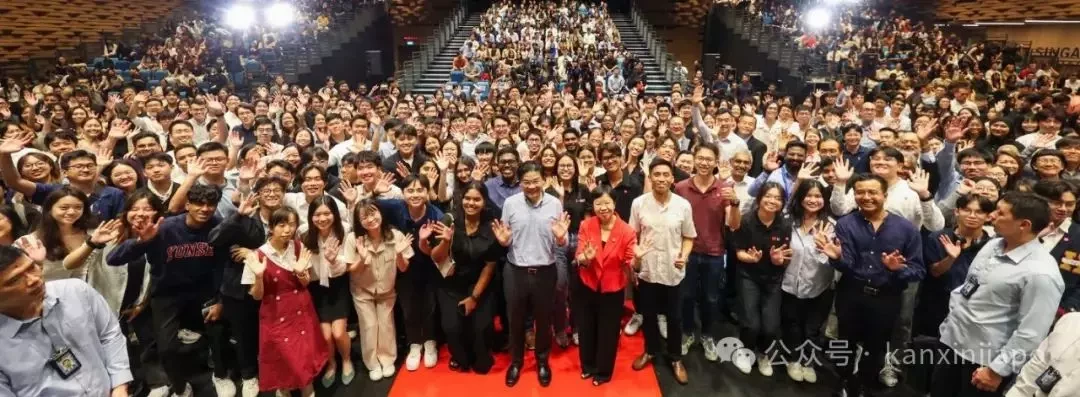
以下是英文質詢內容:
Distinguished guests
Ladies and gentlemen
Students
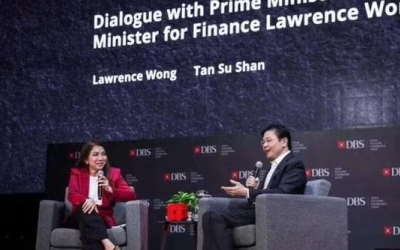
I am very happy to join all of you for this evening’s dialogue session.
It is very good to have the chance to meet with young students from our ITEs, polytechnics and universities.
And I thank IPS, Varsity Voices, and SMU for making this event happen.
I am about 30 years older than most of you. I may not look it but I am. I reflected on what life was like when I was around your age, meaning the students』 age, not the ones seated in the front row. Life in the early 90s, at that time – the internet was still very new, we did not have smart phones, we certainly did not have social media.
It was a different world. China’s economic rise was only beginning to take shape at that time. The Berlin Wall had just fallen, and the Soviet Union had dissolved. America had emerged as the sole super-power of the world. And thereafter, we enjoyed peace and stability, especially in the Asia Pacific, we saw the flourishing of globalisation and trade.
Singapore was also very different at that time. I know sometimes there is a tendency to romanticise the past; we think that the 「good old days」 are always better. You probably hear it a lot from your parents. But things were not all that rosy back then either.
At that time in Singapore, our public transport system, for example, was not as connected as it is now. We only had two MRT lines – East-West and North-South, what we now call the green and red lines. And you look at our MRT map, it is so interconnected now.
There was not so much to do for recreation back then. In fact, Singapore was called a 「cultural desert」 by critics. There is something to be said about the criticism because all I can remember about going out with friends was to Orchard Road, to watch a movie, pretty much that.
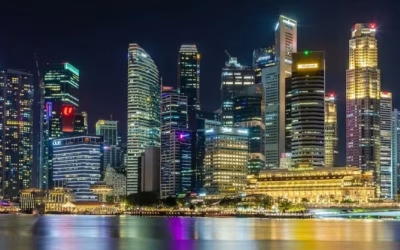
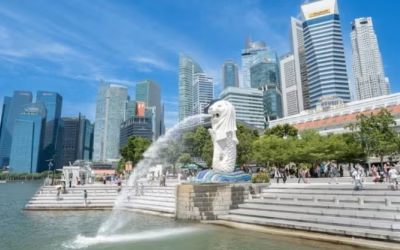
Our arts and cultural offerings were very limited. We did not have the Esplanade, Marina Bay, Gardens by the Bay, or the Sports Hub.
Much has changed in the last 30 years.
There have been ups and downs along the way. But on the whole, our lives have gotten better in Singapore. Our living environment has improved significantly – we have beautiful HDB estates, we have more green spaces and park connectors, we have a much connected and convenient public transport system. Our economy is stronger, it is more diversified and there are many more opportunities including more good-paying jobs for Singaporeans. Life in Singapore has become more vibrant – we now have more recreational options, as well as sports, arts, and music events.
Put another way, in my cohort – those of us born in the early 70s – about 55% of us went on to post-secondary education. Nowadays, almost everyone in the cohort has the chance to pursue their post-secondary education – be it at university, polytechnic or ITE. A young university graduate at that time; someone like me in the early 90s would have started out earning around $3,000 or less. Now it is about $5,000. These are how things have concretely improved over time.
No doubt there were challenges along the way. The changes that Singapore went through over the decades were sometimes disorientating and disruptive to certain segments of society. We also went through our share of challenges. We had the Asian Financial Crisis in 1997, SARS in 2004, and the global financial crisis of 2008. But each time, we rallied together, we weathered through the storms and emerged stronger.
What can we expect now – looking ahead, over the next 20-30 years? I think it is impossible to predict what will happen. No one can tell you this will certainly take place. But I have no doubt that we will face our share of challenges in the years and decades ahead. For one, Singapore will have to operate in a more difficult external environment. The previous era of globalisation and free trade is over. We are not going to go back to that again. We now see a new era of competition, especially between the major powers and between US and China. The world is becoming more dangerous and fragmented. It will be increasingly difficult for countries to come together to solve global problems.
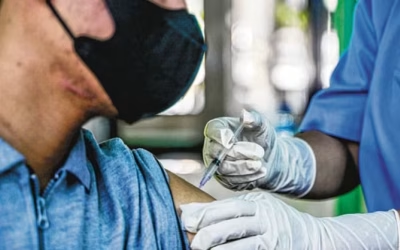
Take the problem of tackling a big issue like the pandemic. During the height of the pandemic, everyone said – let us work together to improve global surveillance systems so that if a virus were to start up again, we would know and we would get better at detecting it quickly and we can take appropriate safeguards and measures. That was at that time, now after so many years of talking and discussing, unfortunately, not much progress has been in strengthening the global surveillance system to guard against a future pandemic.
Take the problem of climate change, which is likely to be the biggest problem humanity has to confront in our time. People talk about wanting to cut back emissions. Countries make all sorts of commitments but unfortunately, we do see a backsliding in many of these commitments around the world. Particularly from the large emitters, which means, year-by-year emissions continuing to rise, global temperatures continuing to rise, and we are all headed towards a climate disaster. On the climate, it looks like things might very well get worse before it gets better.